VisitMinnewanka Loop · Banff National Park
Things to do at Lake Minnewanka and Two Jack Lake
The best things to do at Lake Minnewanka are the one-hour cruise (May to mid-October), a rented kayak or motorboat, the Stewart Canyon walk and a picnic on the shore. Just across the dam, Two Jack Lake adds sunrise reflections of Mount Rundle, two campgrounds and calm water where, unlike on Minnewanka, you may paddle your own canoe or board.
- From Banff
- 10.6 km, 15–20 minutes by car
- Cruise season
- May to mid-October, weather permitting
- Your own canoe or SUP
- Two Jack Lake yes (free permit) · Minnewanka no
- Parking
- Free, but a park pass is required
- Warm swim
- Johnson Lake, on the same loop road
- Bus
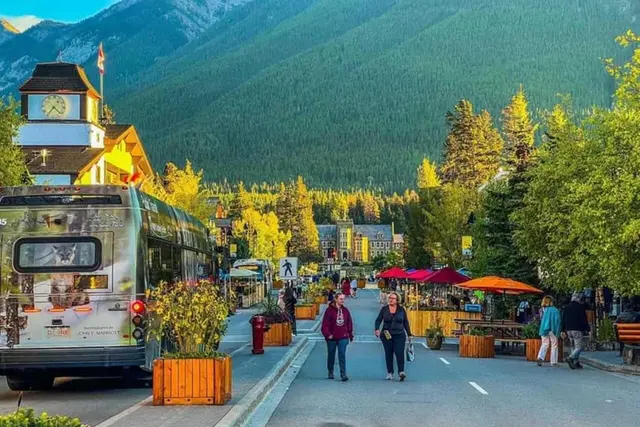
- Roam Route 6 from downtown Banff, mid/late May to early October
Updated October 19, 2026Facts checked against Parks Canada and operator sourcesContains partner links
Tours for this page: Things to do
Nothing matches this filter.
See all on GetYourGuide →Prices from GetYourGuide, checked October 19, 2026; they change with date and group size.
Things to do at Lake Minnewanka: the short list
Lake Minnewanka is the largest lake in Banff National Park, about 21 km (13 mi) long, and most of the action is at its west end, where the day-use area, dock and trailhead sit together. The rest is spread along the Minnewanka Loop, a road circuit of about 13 km past Two Jack Lake, Johnson Lake, Cascade Ponds and Bankhead.
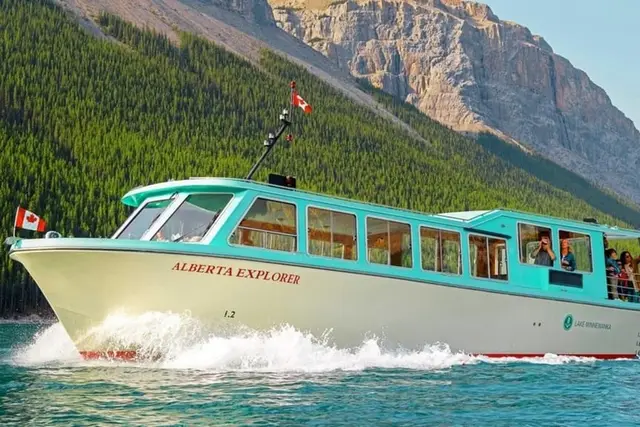
- Take the cruise. Pursuit's Classic Cruise is about an hour with a guide, heading east toward Devil's Gap and back: the easiest way to grasp how big the lake is. Variants and timings are on the cruise page, the Beer Voyage and late sailings on the evening page.
- Rent a boat. Kayaks, canoes and 16-ft motorboats go out from the boathouse at the dock, walk-up only. Since private boats without motors are banned here, rentals are your way onto the water; see the rentals page.
- Fish for lake trout. You need a national park fishing permit (not an Alberta licence); the season runs from the Saturday of the Victoria Day long weekend to Labour Day. A private fishing charter runs from the dock, currently from about $530 CAD on GetYourGuide (check in the checkout whether that's per person or per boat). More on the fishing page.
- Walk Stewart Canyon. About 1.5 km each way, about 1 hour return, almost flat, from the kiosk past the picnic area to a bridge over the Cascade River. Longer trails go on from there; see the hikes page.
- Picnic on the shore. There are picnic tables, flush-toilet washrooms by the lot and bear-proof bins. The Black Anchor Snack Shop by the dock is the only food at the lake, and only in the cruise season.
- Learn what's under the water. A resort village, Minnewanka Landing, was drowned when the 1941 dam raised the lake by roughly 20 to 30 metres. Interpretive panels tell the story on shore, and the history page goes deeper. Qualified cold-water divers can visit the ruins with Parks Canada's free self-certification permit.
- Watch the stars. The shore faces north and sits away from town light. Banff is not a Dark Sky Preserve, but this is one of its best night spots. A small-group stargazing tour walks the shore and then sets up telescopes at Two Jack, from about $140; more on the stargazing and wildlife page.
- Look for bighorn sheep. They're often on the road above Two Jack Lake. Elk, mule deer, eagles and loons live here too; bears and wolves are possible. Keep at least 30 m from sheep and elk, and at least 100 m from bears and wolves, even in the car.
- Spend a morning at Two Jack Lake. The Rundle reflection, paddling with your own boat, camping. It gets its own section below.
- Drive or ride the loop. Johnson Lake for a warm swim, Cascade Ponds for a picnic, and Bankhead for a coal-mining ghost town on dry land.
Two Jack Lake: sunrise, camping and paddling
Two Jack Lake is a separate, smaller lake just south of the Minnewanka dam. No cruises; just Mount Rundle across the water and two campgrounds. Many of the famous "Minnewanka" sunrise photos online are, in fact, Two Jack.
Sunrise and the Mount Rundle reflection
On a calm morning, Rundle doubles in the water. Calm is the key word: wind wrinkles the surface quickly, and afternoons are the windy part of the day. The day-use lot fills most summer days, so photographers who want the shore to themselves come before first light. Watch for bighorn sheep on the slopes above the road on the drive in.
Paddle boarding and canoeing on Two Jack
This is the paddler's lake of the pair. Bring your own canoe, kayak or stand-up paddleboard, fill out Parks Canada's free self-certification permit and make sure the boat is clean, drained and dry. Pursuit's rental boats never leave Minnewanka. The water is cold all summer (Banff's lakes are seldom above 10 °C, says Parks Canada), so wear a lifejacket and stay near shore if the wind picks up. Two Jack is also, with Minnewanka, the only lake in Banff National Park where scuba diving is allowed.
Two Jack campgrounds
There are two, both run by Parks Canada and both on Roam Route 6.
- Two Jack Lakeside: 74 sites, some right on the water, including 10 oTENTiks and walk-in tent sites, roughly late May to early October. It has showers. Currently $34 a night, or $147.50 for an oTENTik.
- Two Jack Main: 380 unserviced sites, roughly mid-June to Labour Day, with water and flush toilets but no showers. Currently $29.50 a night.
Both book through Parks Canada on its launch day in winter, and summer weekends sell out.
Lakes along the loop road
- 1Two Jack LakeSeparate lake: Rundle sunrise reflections, campgrounds, paddling with a permit
- 2Johnson LakeWarmest swimming lake near Banff; 2.9 km loop; closed to fishing
- 3Cascade PondsPicnic ponds at the start of the loop; first Route 6 stop; no fishing
- 4Lower BankheadCoal-mining ghost town (early 1900s–1922); short loop walk; road closed in winter
- 5Minnewanka lookoutRoadside view down the lake near the dam
- 6Marina & cruise dockCruise dock, ticket office, boat rentals and the Black Anchor Snack Shop (summer)
Map data © OpenStreetMap contributors (ODbL). Simplified; not for navigation.
Johnson Lake: the one you can swim in
Johnson Lake is widely considered the warmest lake for swimming near Banff, which in practice means you can stay in longer than ten seconds. It's a short turn-off on the east leg of the loop, with a 2.9 km loop trail (about 1 hour, 90 m of gain) that circles the shore. Bring a towel, not a rod: Johnson Lake is closed to fishing. Route 6 stops here, too.
Don't confuse it with Johnston Canyon, the waterfall walk on the Bow Valley Parkway west of town. And when a day tour has "Minnewanka" in its title, read the itinerary: several list Johnson Lake as the actual stop.
Cascade Ponds and Bankhead
Cascade Ponds are the first stop on the loop (and on Route 6): shallow ponds with picnic tables, fire pits and big views of Cascade Mountain and Rundle. It's the family spot of the loop: short distances, nothing to fall off. Fire bans may apply in dry summers, and there's no fishing. In winter people skate here, at their own risk; Parks Canada doesn't monitor or mark natural ice.
Bankhead was a coal-mining town on the west leg of the loop, opened in the early 1900s and abandoned in 1922. Despite what you may read, it is not under the lake: its ruins sit on dry land along the Lower Bankhead trail, an easy loop of about 1.1 km with about 70 steps, 30–45 minutes. Upper Bankhead is the trailhead for C-Level Cirque (3.8 km one way, 440 m of gain, about 3 hours return), past old mine workings.
Half-day and full-day itineraries
Everything below starts and ends in Banff, 15–20 minutes away. In July and August the Minnewanka lots fill by mid-morning, so arrive before 9 a.m. or take the bus; the getting-there page has the details.
Two Jack Lake for the sunrise reflectionOnly if it's calm; check the sky the night before
Coffee in the car, then on to the Minnewanka lotArrive before 9 a.m. to park easily
Stewart Canyon bridge and backAbout 1 hour return
Check in at the dockAt least 15 minutes before; it's a 10-minute walk from the lot
Classic CruiseAbout 1 hour; bring a warm layer
Lower Bankhead loop on the way back30–45 minutes; west leg open in summer only
Half day without a car. Take Roam Route 6 from the Banff High School transit hub (about 25 minutes; currently $2 for adults, free with a same-day, pre-purchased cruise ticket). Cruise, walk to Stewart Canyon bridge, grab a snack at the Black Anchor and ride back, stopping at Two Jack if the timetable suits. Route 6 runs mid/late May to early October only.
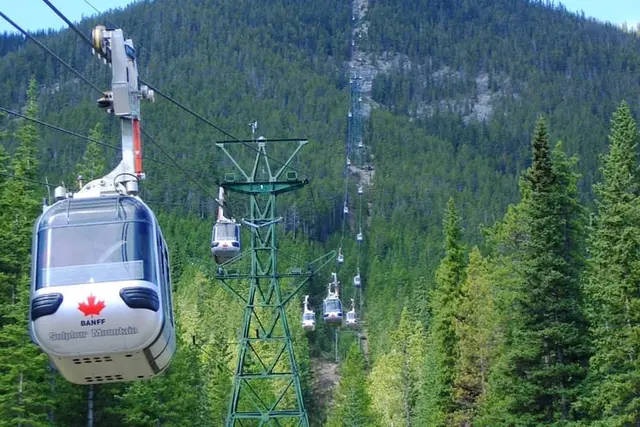
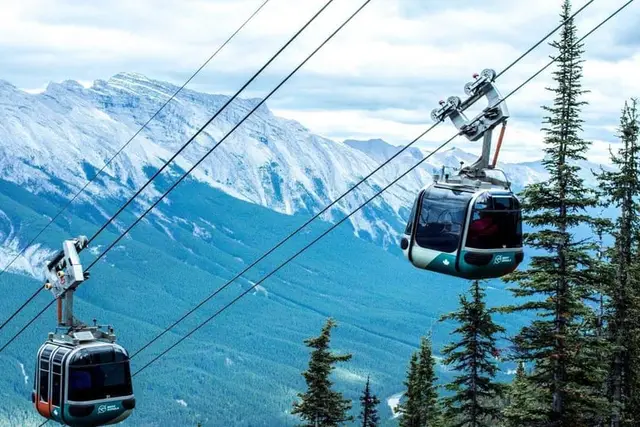
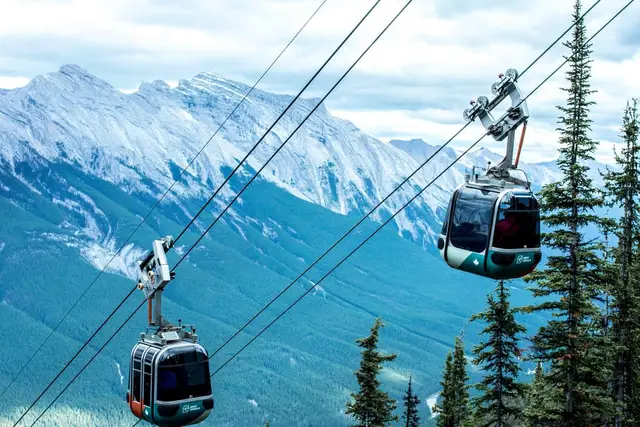
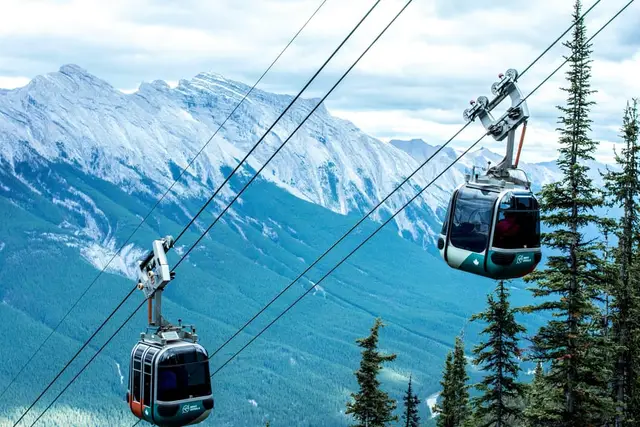
Full day. Start with the Johnson Lake loop (1 hour) or, if you want a real climb, C-Level Cirque (3 hours). Midday: the cruise and Stewart Canyon. Late afternoon: Two Jack or Cascade Ponds. Finish in town at the Banff Upper Hot Springs (open daily into the evening; check hours) or the Banff Gondola, an 8-minute ride up Sulphur Mountain.
Off-season day. From mid-October to early May there's no cruise, no rentals and no snack shop, but the lake is still reachable by car on the east side. Two Jack at sunrise, Stewart Canyon (it can be very icy; bring traction), the Johnson Lake loop and a Cascade Ponds picnic make a good, quiet day. The season page covers winter at the lake.
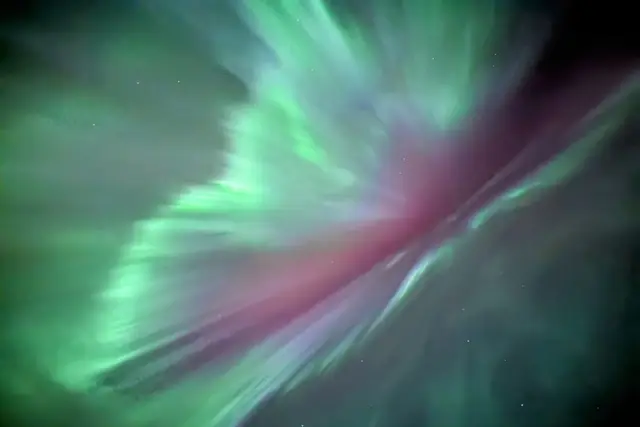
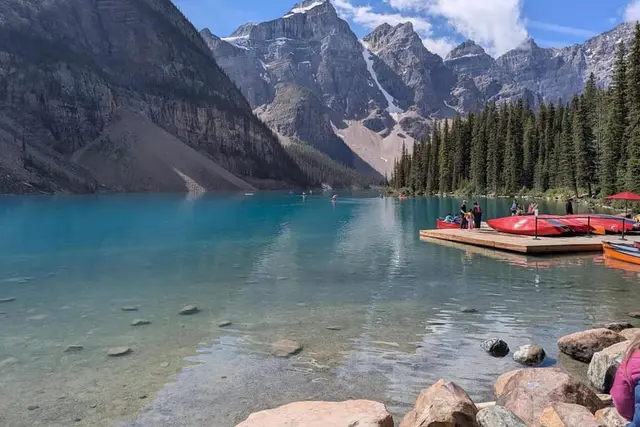
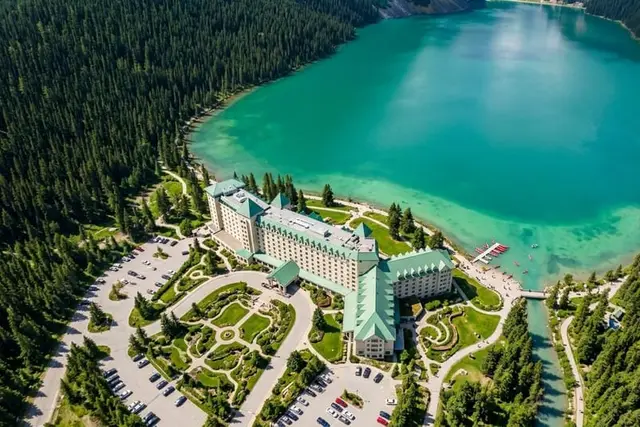
No car at all, any season. Some day tours from Banff, Canmore or Calgary stop at both lakes. The Gondola, Two Jack and Minnewanka tour adds the Banff Gondola and the hot springs and runs from about $95; the Louise, Emerald, Minnewanka and Two Jack tour pairs the loop with Lake Louise, from about $75. These are lake stops: check whether the cruise ticket is included in the listing, and remember the cruise only runs from early or mid-May to Thanksgiving Monday in October. If the cruise matters most, compare the options on the day tours page.
See all on GetYourGuide →Prices from GetYourGuide, checked October 19, 2026; they change with date and group size.
Photography, engagement photos and elopements
Weddings, elopements and engagement shoots need Parks Canada's registration form, submitted ahead (Parks Canada calls it a registration, not a permit, and lists no fee). The rules:
- a maximum of 20 participants, and no exclusive use: you can't cordon off a beach or a viewpoint;
- props are limited to an arch, a table and a chair;
- no confetti of any kind and no releases;
- no amplified sound;
- no drones: they're banned in all national parks, wedding or not;
- no weddings in the campgrounds;
- everyone present needs a valid park pass;
- wedding photographers need a Parks Canada business licence. Ask yours to confirm they hold one.
Day-use areas are open from 7 a.m. to 11 p.m.; weekday mornings are your best chance of a quiet shoreline. For vows on the water, Pursuit offers private charters that can take a wedding party to a remote spot on the lake; they're quote-based and arranged directly.
Instagram tips. Caption Two Jack as Two Jack: the Rundle reflection is not Lake Minnewanka. And wildlife photos need a long lens, not a short walk; elk can be aggressive in late spring (calving) and autumn (the rut).
Weather at Lake Minnewanka by month
These are Environment and Climate Change Canada's averages for the station in the town of Banff, at about 1,384 m. The lake sits about 100 m higher and catches more wind: expect it a little cooler than town, and afternoon gusts are common.
| Month | Avg high | Avg low | Precipitation | What it means at the lake |
|---|---|---|---|---|
| January | −3.5 °C | −13.5 °C | 19 mm | Frozen; ice not monitored |
| March | 3.7 °C | −8.2 °C | 29 mm | Winter walking, icy trails |
| May | 14.3 °C | 0.5 °C | 50 mm | Cruise starts; snow still possible |
| June | 17.9 °C | 4.4 °C | 73 mm | Wettest month; long days |
| July | 22.5 °C | 6.8 °C | 47 mm | Warmest; busiest; lots full early |
| August | 22.1 °C | 5.8 °C | 47 mm | Warm days, cold nights |
| September | 16.7 °C | 2.2 °C | 45 mm | Quieter; first snow possible |
| October | 9.1 °C | −2.4 °C | 36 mm | Cruise ends Thanksgiving Monday |
July is the warmest month, with average highs around 22 °C in town, and June is the wettest. Nights stay cool even in midsummer, with lows around 6–7 °C, so bring a warm layer for the cruise and anything after sunset. Snow can fall in May and again from September. Parks Canada warns of very sudden strong winds and waves on Lake Minnewanka, especially in the afternoon, which is one more reason to paddle or fish early.
What is there to do at Lake Minnewanka?
In season (May to mid-October): the one-hour cruise, kayak, canoe and motorboat rentals, fishing for lake trout, the Stewart Canyon walk and picnics. All year: the lakeshore, longer hikes, stargazing and wildlife watching on the loop road. Two Jack Lake, Johnson Lake, Cascade Ponds and Bankhead are all on the same loop.
Can you paddle board on Two Jack Lake?
Yes. Private canoes, kayaks and paddleboards are allowed on Two Jack Lake with Parks Canada's free self-certification permit (Clean, Drain, Dry). They are not allowed on Lake Minnewanka, where only the on-site rentals may go out.
Is there parking at Two Jack Lake?
Yes, a day-use lot (you need a park pass), but it fills most summer days. Come early, or take Roam Route 6, which stops at the day-use area and both campgrounds.
Do I need a permit for engagement photos or an elopement at Lake Minnewanka?
You submit Parks Canada's registration form; no fee is listed. Groups are capped at 20, there's no exclusive use, no drones and no confetti, and your photographer needs a Parks Canada business licence.
How much time do you need at Lake Minnewanka?
Two hours covers the cruise and a short walk. Half a day adds Two Jack and Bankhead; a full day lets you hike, cruise and finish the loop at Johnson Lake or Cascade Ponds.